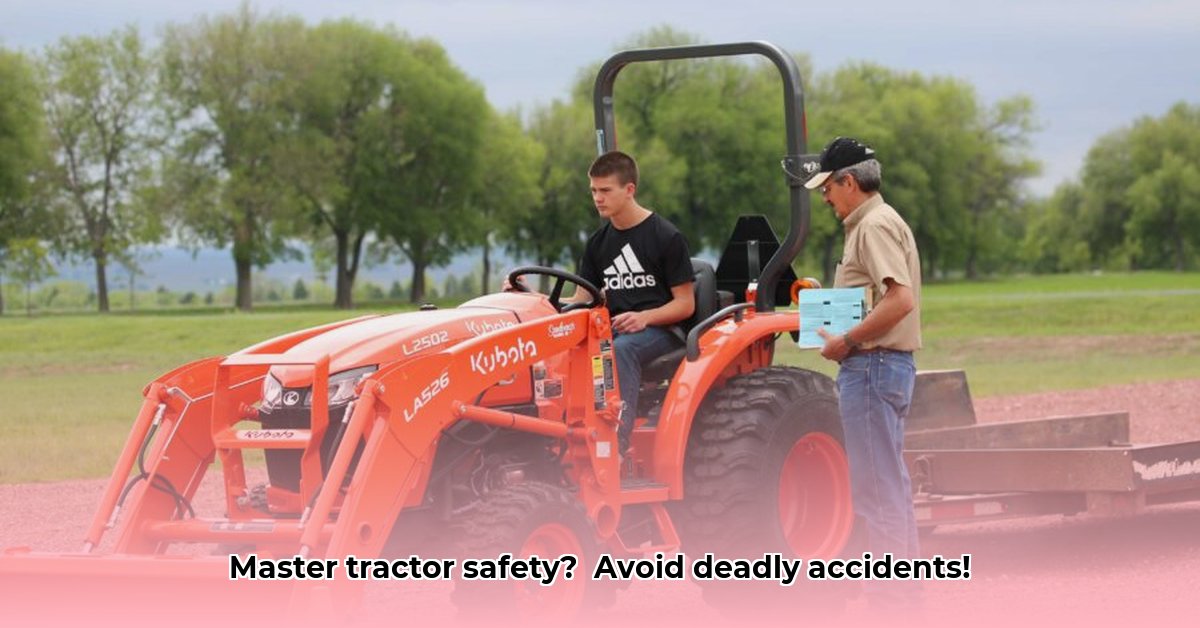
Tractor Safety Training: Mastering Farm Equipment and Preventing Accidents
Farming demands dedication and skill. Tractors are vital tools, but improper handling leads to serious accidents. This training guide emphasizes safe operating practices to protect you and others. Mastering tractor safety isn't just about rules; it's about safeguarding lives and ensuring a productive, injury-free work environment.
For more information on rollover prevention, see this helpful resource on tractor rollovers. Did you know that tractor rollovers account for a significant portion of farm fatalities? [Insert relevant statistic from a reliable source here, if available]. This underscores the critical need for comprehensive safety training.
Before You Start: The Crucial Pre-Operation Checklist
A thorough pre-operation check is paramount – it's your first line of defense against accidents. Think of it as a pilot's pre-flight checklist: crucial for a safe journey.
- Visual Inspection: Examine the tractor for damage (dents, cracks, loose parts, fluid leaks). Addressing small issues prevents larger problems.
- Fluid Levels: Check engine oil, coolant, hydraulic fluid, and fuel. Low fluids can cause engine failure or overheating.
- Tire Condition: Inspect tire pressure (underinflation increases rollover risk, especially on slopes) and tread depth (worn tires reduce traction).
- Lights and Signals: Ensure all lights and turn signals function correctly for optimal visibility, particularly in low-light conditions.
- Brake Test: Thoroughly test brakes to confirm effective and prompt response. Faulty brakes are unacceptable.
- Safety Equipment: Verify ROPS (Rollover Protective Structure) and FOPS (Falling Object Protective Structure) are securely installed and in good condition. Always wear your seatbelt!
- Implement Inspection: Inspect any attached implements (plows, mowers, etc.) for damage or loose parts. Ensure secure attachment.
Operating Your Tractor Safely: Essential Techniques
Operating a tractor differs significantly from driving a car. It demands specific skills and heightened awareness.
- Starting and Stopping: Use the parking brake, engage the clutch smoothly, and avoid jerky movements to maintain control.
- Steering and Maneuvering (Especially on Slopes): Take wide turns, especially on inclines, to prevent rollovers. Reduce speed considerably on slopes and avoid sharp turns.
- Hitching and Unhitching Implements: Always disengage the PTO (Power Take-Off – a rotating shaft transmitting power to implements) before connecting or disconnecting implements. Never work under a raised implement.
- Safe PTO Use: Shield the PTO shaft and keep all body parts away from moving parts. The PTO is a significant source of injury if not handled correctly.
- Working Around Others: Maintain awareness of your surroundings and communicate clearly with others to prevent collisions. Never assume others see you.
- Maintenance and Inspection: Regular maintenance prevents failures. Address wear and tear promptly.
Emergency Procedures: Being Prepared
Accidents can occur despite precautions. Knowing how to respond is crucial.
| Emergency Situation | Immediate Actions |
|---|---|
| Tractor Rollover | If safe, exit the tractor calmly. Seek immediate medical attention. |
| PTO Shaft Entanglement | Immediately shut off the PTO, call for help, and await professional assistance. Do not attempt self-rescue. |
| Fire | Evacuate immediately. If trained and safe to do so, use a fire extinguisher. Call emergency services. |
Regulatory Compliance and Protective Gear
Comply with all relevant safety regulations. ROPS, FOPS, and seatbelts are not optional—they are legally mandated and life-saving.
Post-Operation Procedures
After operation:
- Switch Off and Secure: Turn off the engine and engage the parking brake.
- Lower Implements: Lower and secure all implements.
- Clean: Remove debris to prevent corrosion and improve visibility.
- Safe Storage: Park in a designated, secure area.
Glossary of Terms
- ROPS: Rollover Protective Structure (safety cage).
- FOPS: Falling Object Protective Structure (protective canopy).
- PTO: Power Take-Off (shaft transmitting power to implements).
Remember, safe tractor operation is ongoing. Regular training, adherence to safety protocols, and proactive maintenance are vital for preventing accidents. Make safety your top priority.
How to Retrofit Older Tractors with Modern Safety Features
Many older tractors lack modern safety features. Retrofitting is a crucial investment in worker safety. A proactive safety approach protects workers and ensures farm sustainability.
Assessing Your Tractor's Safety Needs
Evaluate your tractor's safety features. Does it have ROPS and seatbelts? These are essential for rollover protection. Consider these vital upgrades for safety:
- ROPS Retrofit: Install a ROPS designed for your model. Professional installation is strongly advised for safety and compliance.
- Improved Lighting: Enhanced lighting increases visibility, especially during dawn/dusk operations.
- SMV Emblem: A slow-moving vehicle emblem improves visibility to other drivers, reducing collision risk.
- Back-up Alarm: A back-up alarm enhances safety when operating near buildings or other workers.
Training: The Foundation of Safe Operation
Regardless of tractor age or features, training remains crucial. Certified training courses emphasize safe operating practices and best practices. The human element plays a vital role in safe tractor operation. Regular training reinforces correct procedures and updates operators on best practices. The investment in training greatly outweighs the costs of potential accidents.
Remember, prioritizing safety is an investment in your well-being and the farm's long-term success. By following these guidelines, you’re not only protecting yourself but also contributing to a safer and more productive work environment for everyone.